
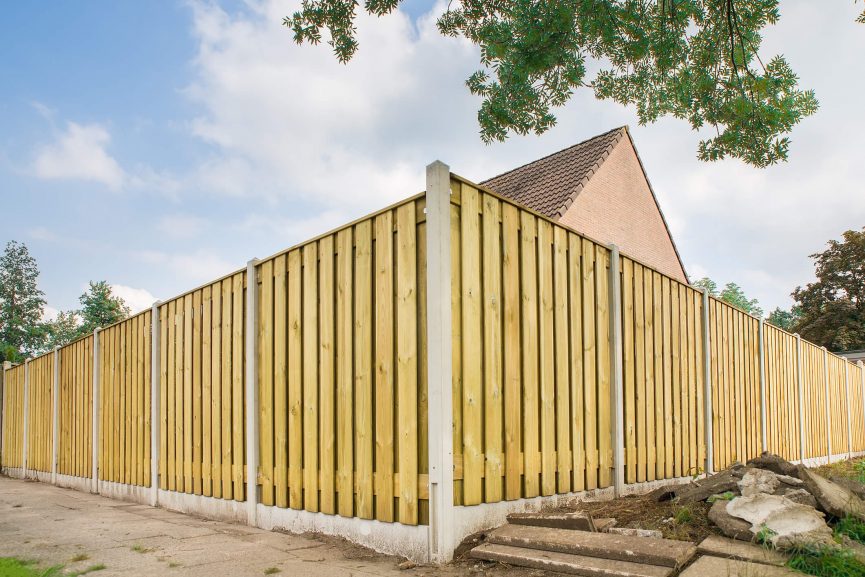
Why do we build fences?
It’s not just about marking the edge of our property. It’s about creating a sense of belonging, privacy, and security, a boundary that defines where your garden ends and where your sanctuary begins.
Across Birmingham and the West Midlands, homeowners are embracing outdoor living more than ever. Yet, with the region’s unpredictable weather, dense housing, and growing need for privacy, choosing the right fence isn’t a minor decision.
Still, too many homeowners make their choice based purely on price, overlooking factors like maintenance, durability, and how the material performs in Birmingham’s damp, changeable climate.
That’s where the real question begins: should you choose wood or composite?
Do you value the natural warmth and tradition of wood, or the long-term ease and durability of modern composite fencing?
With this guide from Wilfirs, your trusted local experts in fencing panels, Birmingham, let’s explore both materials in depth.
Understanding the Difference Between a Wooden Fence and a Composite Fence
1. Wooden Fencing
Most wooden fences in the West Midlands are made from softwood such as spruce or pine, though hardwoods like cedar and oak are sometimes chosen for premium installations.
Each panel is treated to resist moisture and decay, helping it withstand the Midlands’ wet winters.
Common choices in Birmingham gardens include closeboard fencing (also known as feather edge panels), larch lap panels, and picket fencing. Each offers a different blend of privacy, cost, and visual character.
The advantages of choosing wood are affordable, traditional, and adaptable.
When properly maintained, wood fencing in the West Midlands typically lasts 10 – 15 years, though untreated timber may begin to deteriorate much sooner in damp or shaded areas.
2. Composite Fencing
Composite fencing combines wood fibres and recycled plastic to create a panel that looks like timber but performs with far greater durability.
This material was born from a simple “why”: the need for sustainable products that last longer and require less effort to maintain. For Birmingham homeowners with busy lifestyles, it’s an appealing choice, resistant to rot, UV damage, and pests, all without the need for painting or sealing.
Composite fencing offers a consistent, contemporary finish, available in a range of muted tones that complement both traditional and new-build properties. Its panels stay straight, clean, and fade-resistant for decades.
The drawbacks would be a higher initial cost and fewer opportunities for colour customisation. Yet many see this as an investment rather than an expense, an upfront cost that delivers long-term savings and peace of mind.
Quick Comparison Between Wooden and Concrete Fences
When deciding between wooden and composite fencing in Birmingham, it helps to see how they stack up side-by-side.
| Factor | Wooden Fencing | Composite Fencing |
| Lifespan | 10 – 15 years | 25 – 30 years |
| Maintenance | Stain or seal every 2 – 3 years | Occasional cleaning only |
| Durability | Vulnerable to rot and insects | Resistant to rot, moisture, and pests |
| Environmental Impact | Renewable, but needs chemical treatment | Often made from recycled materials |
| Appearance | Natural, warm, fully customisable | Sleek, modern, colour-stable |
| Best For | Traditional homes and tighter budgets | Long-term, low-maintenance living |
How Birmingham’s Weather Changes the Equation
Birmingham’s climate is as varied as its architecture, from crisp, damp mornings to wet winters and humid summers. It’s a combination that tests the resilience of any fence.
Untreated or poorly maintained wooden fencing struggles in these conditions.
Constant rainfall encourages rot, while fluctuating humidity causes the timber to expand and contract, eventually leading to warping or splitting. Additionally, if we’re considering the city’s clay-heavy soil, then shifting fence posts as the ground expands and contracts with the seasons.
This is where composite fencing proves its worth. Engineered to resist moisture, it won’t absorb water or swell after a storm. The panels remain stable and upright even in Birmingham’s damp soil, offering years of reliability with minimal upkeep.
That said, wood fencing still holds a special place in older neighbourhoods like Moseley, Harborne, and Edgbaston,
Many homeowners prefer its natural warmth, especially when paired with period architecture and mature gardens.
Ultimately, the best fence for your Birmingham home isn’t just about how it looks on day one; it’s about how it performs when the weather inevitably tests it.
Cost Over Time
When it comes to wooden vs composite fencing in Birmingham, the question isn’t just how much it costs; it’s how long it lasts.
Wooden Fencing
In the short term, wood fencing appears more economical. A typical 20-metre boundary might cost around £1,200 – £1,500 to install, depending on style and timber grade. But every two or three years, it demands fresh staining, sealing, and the occasional board replacement.
Composite Fencing
Composite fencing comes with a higher upfront cost, around £2,200 for the same boundary, but virtually eliminates the need for maintenance. Beyond an occasional clean, there’s little else to do.
Over time, that difference narrows. By year eight or nine, the total spend on a wooden fence often matches or exceeds the cost of composite, particularly when you factor in labour and product lifespan.
Sustainability
Every home improvement decision carries an environmental cost; choosing the best fence materials in Birmingham means looking beyond your boundary line.
Wooden Fencing
Wood fencing remains one of the most sustainable natural materials when sourced responsibly. As a renewable resource, it’s biodegradable and serves as a natural carbon sink, locking away carbon dioxide during its life cycle. At Wilfirs, we offer FSC-certified wooden panels, ensuring the timber used comes from well-managed forests.
Composite Fencing
Composite fencing, on the other hand, takes a different approach to sustainability. Made from up to 90% recycled materials, it repurposes wood fibres and plastics that might otherwise end up in landfill. Its longer lifespan and lack of chemical treatments mean less waste and fewer pollutants over time.
Design & Aesthetic Choices
Your fence is part of your home’s personality. If you prefer a rustic charm or a contemporary statement, the right material can make all the difference.
Wooden Fencing
Wood fencing offers unmatched versatility. It can be painted, stained, or left untreated to age gracefully into a silvery grey patina. This natural variation makes it perfect for traditional or cottage-style homes, where character and authenticity are key.
Composite Fencing
Composite fencing, meanwhile, provides a sleek and uniform finish, ideal for modern builds in Birmingham. Available in subtle tones such as greys, browns, and charcoals, composite panels maintain their appearance with little effort, ensuring your garden always looks well-kept.
Why Choose Wilfirs for Fencing in Birmingham?
For over 50 years, homeowners across Birmingham and the wider West Midlands have turned to us for fences that combine strength, style, and substance. Our focus is on craftsmanship, quality, and the fine details that make all the difference.
We understand that every property tells a unique story. That’s why we supply and install both wooden and composite fencing panels, as well as concrete and metal post systems.
At Wilfirs, every panel is built using galvanised fixings rather than zinc-plated alternatives, preventing rust and ensuring long-term structural integrity. Even the smallest details, from post caps to corner joints, are carefully chosen to maximise lifespan and appearance.
Our experts are here to help you choose the perfect solution for your home. Call us today on 0800 0190 316 or 024 7646 6313, or request a free, no-obligation quote online.
Frequently Asked Questions (FAQs)
1. How long will a wooden fence last in Birmingham’s climate?
With regular treatment and maintenance, a wooden fence can last 10 – 15 years. Without care, exposure to rain and humidity may reduce its lifespan to 5 – 8 years.
2. Does composite fencing fade or crack?
Modern composite fencing, especially capped varieties, shows minimal fading and resists cracking even under UK weather extremes.
3. Do I need planning permission for a new fence in Birmingham?
Generally, no fences under 2 metres high are permitted. However, front garden fences or properties within conservation areas may require council approval.
4. What’s better for uneven or clay-heavy ground?
In areas with clay or shifting soil, composite fencing supported by reinforced concrete or metal posts offers better long-term stability.
